
As AI systems become more autonomous, they don’t just generate responses. They access data, invoke tools, interact with other systems, and increasingly act with delegated authority. That makes access control one of the most critical security boundaries in AI.
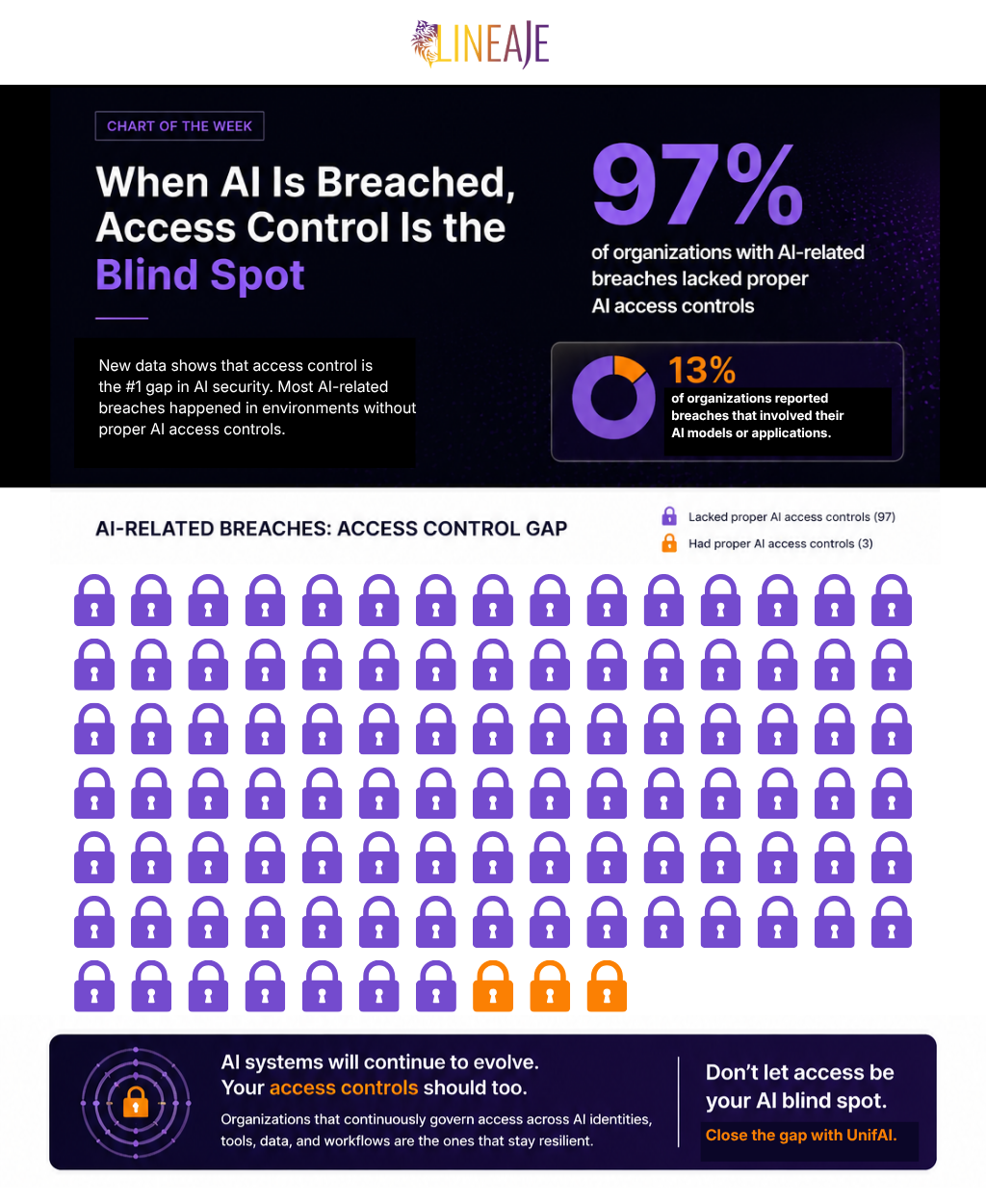
The data makes the gap clear: 13% of organizations reported breaches involving their AI models or applications. Of those organizations, 97% lacked proper AI access controls.
The AI Kill Chain shows why these matters. AI failures don’t always require stolen credentials, malware, or a traditional exploit. Risk can emerge through ambiguous goals, over-broad authority, unbounded memory, and implicit trust—allowing an AI system to take actions it was technically permitted to perform but never should have taken.
Traditional access control asks: Who has access?
AI security has to go further: What can this AI access, what actions can it take, with which tools and data, under whose authority—and under what conditions?
As agents gain more autonomy, organizations need controls that bind AI actions to approved intent: limiting credentials and permissions, controlling tool access, authenticating agent-to-agent interactions, and continuously governing authority across AI workflows.
Because the goal isn't to stop AI from acting. It's to make sure AI never has more authority than it needs to accomplish the intended task.
AI should optimize execution—not define authority.
